SynoGut Review: Ingredients, Claims and What to Know Before Buying
Considering SynoGut? Review its ingredients, label transparency, digestive-health claims, evidence, safety considerations and what to know before buying.
This article is based on research of publicly available information. We have not personally tested this product.
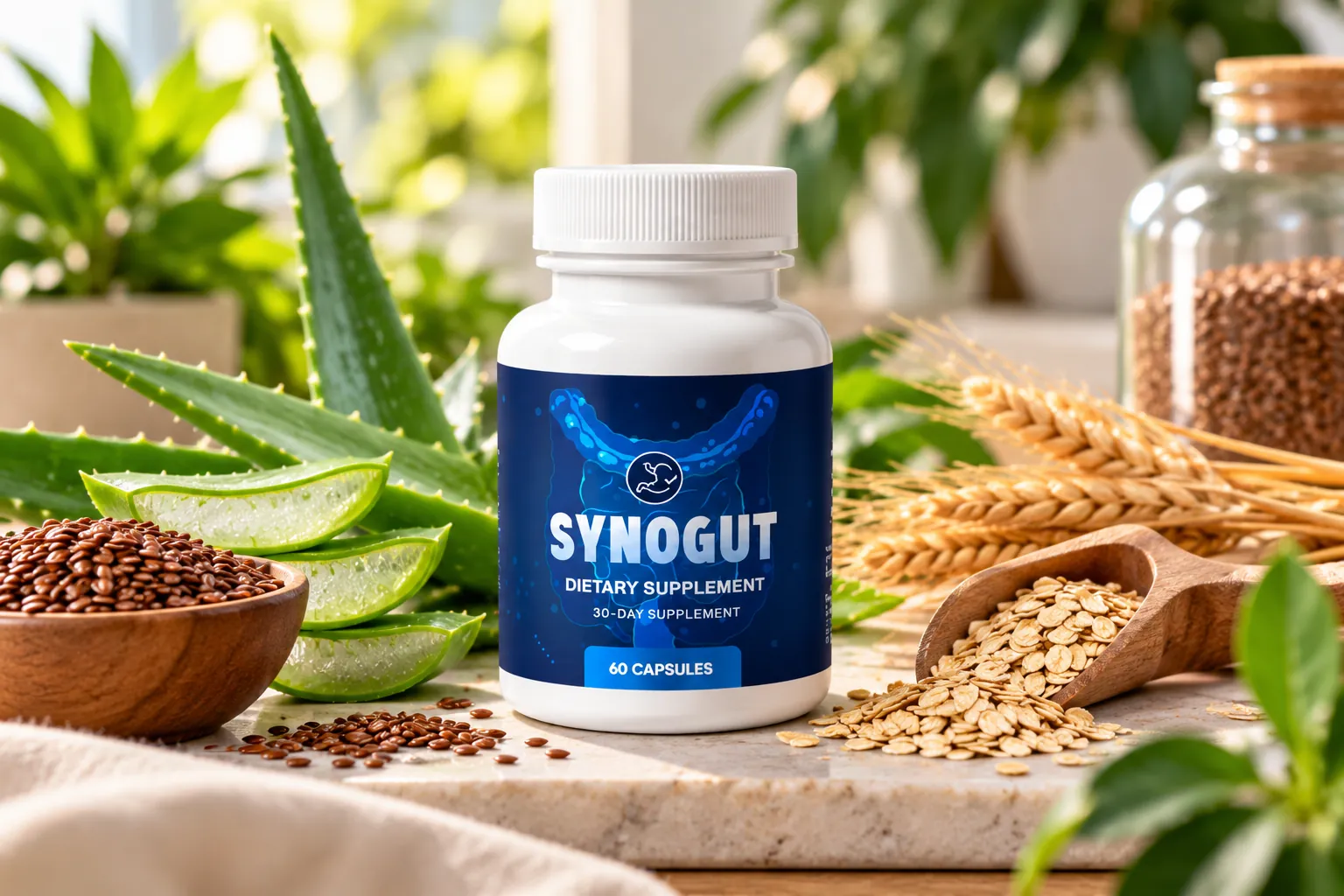
Table of contents
Quick Summary
- Wellness Buyer Guide has not purchased, used or tested SynoGut. This review is based on the seller's public pages and independent sources.
- The SynoGut sales pages we reviewed list 10 ingredients, including psyllium, bentonite clay, black walnut, aloe vera, L. acidophilus and glucomannan. Another site that sells SynoGut names only six. We could not resolve the difference from a verified label.
- We could not verify a Supplement Facts panel, the serving size, the amount of each ingredient or the probiotic strain and count.
- We found no published clinical study of SynoGut itself. Research on an ingredient such as psyllium doesn't show that the finished product works.
- The sales page describes an "FDA approved" facility. The FDA states that it doesn't approve dietary supplements or manufacturing facilities in that way.
If you've seen SynoGut advertised for digestive health and want to understand it before buying, this review sets out what the seller says, what we could check against the seller's own pages and independent sources, and what we couldn't. We looked at the current sales page, the seller's reference list, refund policy, contact page and terms, other sites that sell the product, and guidance from the FDA and the National Institutes of Health on its listed ingredients.
SynoGut at a Glance
| What we found | |
|---|---|
| Product type | Capsules marketed for digestive health (per the seller) |
| Ingredients listed by the seller | 10: psyllium, bentonite clay, black walnut, oat, flaxseed, prune, aloe vera, L. acidophilus, apple pectin, glucomannan |
| Formula consistency | Not consistent: another site that sells SynoGut names six ingredients |
| Supplement Facts panel | Not verified |
| Amount of each ingredient | Not disclosed on the sales page |
| Probiotic strain and count | Not disclosed ("L. Acidophilus" only) |
| Clinical study of SynoGut itself | None found |
| Order support named by the seller | Digistore24 |
| Refund policy | 60 days after shipping; all bottles must be returned; return shipping paid by the buyer |
| Price | One stated price ($69 for a 30-day supply); package prices not verified |
What Is SynoGut?
These are the seller's descriptions, not findings of this review. The sales page also carries the standard notice that its statements "have not been evaluated by the Food and Drug Administration" and that its products "are not intended to diagnose, treat, cure or prevent any disease."
The site is run under the name "Synogut." Its terms of use give no company address, while its refund policy lists a returns address in Aurora, Colorado. Its contact page directs order support to Digistore24, an online retail platform. We found no information on who manufactures SynoGut.
About the sales pages. The affiliate link on this page leads, through Digistore24, to the SynoGut sales page at thesynogut24.com, and that's the page this review describes. We also found another SynoGut sales page, at synogut.com, with the same sales text and ingredient list. That page states that "ClickBank is the retailer of products on this site." Wellness Buyer Guide's affiliate relationship for SynoGut is with Digistore24, not ClickBank. Several other websites also use the SynoGut name and describe themselves as official.
What's Actually in SynoGut?
This is where the public information is least consistent.
The other SynoGut sales page we reviewed (synogut.com) lists the same 10 ingredients. Other sources don't match that list exactly:
- A site that sells SynoGut names six ingredients. It describes itself as a "U.S. stocking partner" for SynoGut that earns money from order links, and lists psyllium, bentonite clay, black walnut, oat, flaxseed and prune. It also states that no SynoGut Supplement Facts panel was supplied.
- A third-party review reports a 10-ingredient label. It describes a serving of 2 capsules with a 1.5-gram proprietary blend, listing the same 10 ingredients (with plant parts such as psyllium husk and oat bran), plus gelatin, magnesium stearate and silicon dioxide as other ingredients.
We could not resolve this discrepancy. The seller's sales page doesn't show a Supplement Facts panel, and we couldn't verify a label image. The six-ingredient list could reflect a different version of the product, or a front label that names only some ingredients, but we couldn't confirm either. We don't treat any of these versions as verified.
What Does the Evidence Say About SynoGut's Ingredients?
One distinction runs through this whole section: evidence about an ingredient isn't evidence about SynoGut. Research on psyllium, for example, uses specific amounts in specific products. Without the amount of each ingredient in SynoGut, that research can't tell you what SynoGut does.
- Psyllium. MedlinePlus (opens in a new tab) describes psyllium as "a bulk-forming laxative" used to treat constipation. It "absorbs liquid in the intestines, swells, and forms a bulky stool, which is easy to pass." MedlinePlus advises drinking at least 8 ounces (240 milliliters) of liquid with each dose. NIDDK lists fiber supplements among the over-the-counter options for constipation (opens in a new tab) and advises drinking plenty of water and other liquids when taking one.
- Oat, apple pectin, flaxseed and prune. These are food-derived sources of fiber. Our guide to fiber and bloating explains how fiber can help regularity, and why adding a lot quickly can cause gas. NCCIH (opens in a new tab) notes that higher doses of flaxseed supplements may cause digestive symptoms such as bloating, fullness and diarrhea.
- Glucomannan. The NIH Office of Dietary Supplements describes glucomannan as "a soluble dietary fiber derived from konjac root" that can absorb a large amount of water. ODS reviews it mainly as a weight-loss ingredient and notes that it can cause loose stools, flatulence, diarrhea, constipation and abdominal discomfort.
- L. acidophilus. This is a probiotic species. NCCIH (opens in a new tab) notes that different types of probiotics may have different effects, so research on one strain doesn't necessarily apply to another. SynoGut's sales page names no strain. Our guide to probiotics for bloating explains why strain and count matter.
- Aloe vera. NCCIH notes that oral aloe can cause abdominal pain, cramps and diarrhea. It also says there isn't enough reliable information to know whether oral aloe helps with digestive conditions such as irritable bowel syndrome.
- Bentonite clay and black walnut. We did not find authoritative evidence in the government sources we reviewed that either ingredient supports digestive health in people. The seller's reference list includes a study of a specific clay preparation in irritable bowel syndrome, but that is a different product used in a specific condition.
Label Transparency and Dosage
Here is what we could and couldn't verify about SynoGut's label:
| Label detail | Status |
|---|---|
| Serving size | Not verified (one third-party review reports 2 capsules) |
| Capsules per bottle | Not verified (the sales page mentions a "30-day supply") |
| Proprietary blend | Not verified (one third-party review reports a 1.5 g blend) |
| Amount of each ingredient | Not disclosed |
| Probiotic strain | Not disclosed |
| Probiotic count (CFU) | Not disclosed |
| Other ingredients | Not verified (one third-party review reports gelatin, magnesium stearate and silicon dioxide) |
| Allergen information | Not verified |
Why this matters. Under FDA labeling rules, a proprietary blend (opens in a new tab) must list the total weight of the blend and its ingredients in descending order of predominance by weight. But it doesn't have to list the amount of each ingredient. That means a buyer can't tell how much psyllium, glucomannan or probiotic a serving contains, and can't compare those amounts with what research has used.
For probiotics, the NIH Office of Dietary Supplements notes that labels typically list the genus, species and strain, and the number of colony-forming units (CFUs). Neither is available for SynoGut from the sources we reviewed. For a broader checklist, see Digestive Health Supplements: What to Look for Before You Buy.
SynoGut Claims vs. What We Can Verify
| Seller claim | What we verified | What buyers should know |
|---|---|---|
| Supports "the health of your digestive system" | No study of SynoGut itself was found | Ingredient research doesn't establish that the finished product works |
| Made in an "FDA approved and GMP certified facility" | The facility and any certification are not named | The FDA states that it doesn't approve dietary supplements or approve manufacturing facilities independently |
| "100% natural ingredients" | An ingredient list is published, but no verified Supplement Facts panel | "Natural" doesn't mean safe or effective; some listed ingredients carry safety cautions |
| A third party verified "the purity of ingredients" | The lab and any test results are not named | You can ask the seller for test results before buying |
| "Not habit forming" | Not independently verified | Ask a healthcare professional about any product used for regularity |
| Limited stock ("we will run out of stock soon") | Inventory can't be verified | There's no need to decide under time pressure |
About "FDA approved." The FDA states that "by statute, the FDA does not approve dietary supplements for safety and effectiveness," and that it "does not approve manufacturing facilities independently." The FDA also notes that registering a facility "does not denote approval." A product made in a registered or inspected facility hasn't been approved by the FDA.
Has SynoGut Been Clinically Tested?
We found no published clinical study of SynoGut itself. The seller's reference list cites 19 sources. These include consumer health articles, news stories and studies of individual ingredients or related topics, such as a clay preparation in irritable bowel syndrome and a probiotic combination in people with high cholesterol. None is a study of the finished SynoGut product.
Studies of individual ingredients can show what an ingredient may do at a given amount. They don't show what a 10-ingredient blend does at undisclosed amounts.
SynoGut Safety and Side Effects: What to Consider
We found no safety study of SynoGut itself. The following is general information about some of its listed ingredients, not a finding that SynoGut causes any particular side effect:
- Fiber ingredients such as psyllium and glucomannan absorb water. MedlinePlus advises drinking at least 8 ounces of liquid with psyllium and telling your doctor if you have difficulty swallowing. MedlinePlus also advises against taking certain medicines, such as digoxin, within 3 hours of psyllium.
- Glucomannan can cause loose stools, flatulence, diarrhea, constipation and abdominal discomfort, according to ODS. ODS also reports cases of esophageal obstruction linked to glucomannan tablets, though not to capsules or powders.
- Oral aloe can cause abdominal pain, cramps and diarrhea, according to NCCIH. In 2002, the FDA required manufacturers to remove aloe latex from over-the-counter laxatives because of a lack of safety data. The sales page doesn't say what form of aloe SynoGut uses.
- Bentonite clay. In 2016, the FDA warned consumers not to use a bentonite clay product sold for swallowing after finding elevated levels of lead. That warning concerned a different product and isn't evidence about SynoGut. We found no published contaminant testing for SynoGut.
- Flaxseed. NCCIH notes possible digestive symptoms at higher doses and theoretical interactions with blood thinners.
Talk with a healthcare professional before using SynoGut if you take medicines, are pregnant or breastfeeding, have a health condition, or have digestive symptoms that are severe, persistent or new.
SynoGut Price and Guarantee
According to the refund policy, the seller doesn't pay return shipping costs, and returns use a form included with the order. Prices, packages and terms can change, so read them on the checkout page before ordering. We didn't verify any other offers or bonuses.
The link below is an affiliate link. It leads through Digistore24 to the SynoGut sales page described in this review, which is not operated by Wellness Buyer Guide.
SynoGut Pros and Cons
Pros and Cons
Potential pros
- The sales page names its ingredients, so buyers can research each one.
- Its best-known ingredient, psyllium, is a recognized bulk-forming fiber used for constipation, according to MedlinePlus.
- The seller's refund policy describes a 60-day return window from the shipping date.
- The sales page includes the standard notice that its statements have not been evaluated by the FDA.
Potential cons
- No verified Supplement Facts panel, so the serving size and the amount of each ingredient are unknown.
- Public sources disagree on the formula (10 ingredients vs. six).
- The probiotic is named only as "L. Acidophilus," with no strain or count.
- No published clinical study of the finished product was found.
- The sales page's "FDA approved" facility wording is misleading.
- Some ingredients carry safety cautions, such as oral aloe and swallowed clay products.
- Under the refund policy, the buyer pays return shipping.
SynoGut vs. Food, Fiber and Everyday Digestive Strategies
A supplement isn't a replacement for food, fluids or medical care. For occasional constipation, NIDDK's guidance focuses on fiber from food, enough liquids and physical activity. Our guides to constipation and bloating and what helps with bloating and slow digestion cover those everyday steps, along with when to see a doctor.
If you decide a fiber supplement makes sense, single-ingredient fiber products have one advantage over proprietary blends: the label tells you exactly how much fiber you're taking.
Our Verdict: What to Know Before Buying SynoGut
We didn't assign a rating. Here's how the evidence adds up:
- What we know: SynoGut is sold through a sales page that directs order support to Digistore24, lists 10 ingredients, offers a 60-day refund policy and makes general digestive-health claims.
- What remains uncertain: The formula itself. Sources disagree on the ingredient list, and we couldn't verify a Supplement Facts panel, the serving size, the amount of each ingredient or the probiotic strain.
- Its strongest aspect: Its first-listed ingredient, psyllium, is a recognized bulk-forming fiber used for constipation.
- Its biggest limitation: Without disclosed amounts or a study of the product itself, there's no way to know whether a serving contains enough of any ingredient to matter, or what the blend does as a whole.
- What to verify before buying: The Supplement Facts panel, the current price and refund terms at checkout, and whether the site you're buying from is an authorized seller.
Frequently Asked Questions
Is SynoGut legitimate?
SynoGut is sold as a dietary supplement through sales pages that direct order support to an established online retail platform. That doesn't verify the product's contents or effects. We found no published clinical study of SynoGut and could not verify its Supplement Facts panel. Several websites describe themselves as the official SynoGut site, so check where you're buying from.
What ingredients are in SynoGut?
The sales page we reviewed lists psyllium, bentonite clay, black walnut, oat, flaxseed, prune, aloe vera, L. acidophilus, apple pectin and glucomannan. Another site that sells SynoGut names only the first six. We could not confirm the formula against a verified label, so check the Supplement Facts panel on the bottle you receive.
Does SynoGut contain psyllium?
Psyllium is listed in every SynoGut ingredient list we found. The amount per serving isn't published on the sales page, so we couldn't compare it with the amounts used in psyllium products for constipation.
Does SynoGut contain probiotics?
The sales page lists "L. Acidophilus," a probiotic species, but doesn't name a strain or give a CFU count. One site that sells SynoGut lists only six ingredients and doesn't include it. Because probiotic effects can differ by strain, an unnamed strain can't be matched to published research.
Has SynoGut been clinically tested?
We found no published clinical study of SynoGut itself. The seller's reference list cites articles and studies about individual ingredients and general topics, not a study of the finished product.
Does SynoGut help with constipation?
That hasn't been shown for SynoGut itself. Psyllium, one of its listed ingredients, is a bulk-forming fiber used for constipation, according to MedlinePlus, but the amount in SynoGut isn't disclosed. If you have constipation, NIDDK's guidance on fiber, fluids and activity, and a conversation with a healthcare professional, are good starting points.
What should I check before buying SynoGut?
Check the Supplement Facts panel for the serving size, the total blend amount and the full ingredient list, and whether the probiotic strain and count are named. Read the current price and refund terms at checkout. If you take medicines, are pregnant or breastfeeding, or have a health condition, talk with a healthcare professional first.
Where is SynoGut sold?
The sales page our affiliate link leads to (thesynogut24.com) directs order support to Digistore24. Another SynoGut sales page we reviewed (synogut.com) states that ClickBank is the retailer of products on that site. We also found other websites that use the SynoGut name and call themselves official, as well as marketplace listings. We could not verify which of those are authorized sellers.
Sources & References
- Manufacturer informationSynoGut sales page (thesynogut24.com) (opens in a new tab). Accessed October 21, 2026The sales page reached through our Digistore24 affiliate link: ingredient list, positioning, pricing text and claims attributed to the seller. Not independent evidence.
- Manufacturer informationSynoGut References (opens in a new tab). Accessed October 21, 2026The seller's own list of 19 cited articles and studies. None is a study of SynoGut itself.
- Manufacturer informationSynoGut Refund Policy (opens in a new tab). Accessed October 21, 2026
- Manufacturer informationSynoGut Contact Us (opens in a new tab). Accessed October 21, 2026Directs order support to Digistore24.
- Manufacturer informationSynoGut Terms of Use (opens in a new tab). Accessed October 21, 2026
- Manufacturer informationAnother SynoGut sales page (synogut.com) (opens in a new tab). Accessed October 20, 2026A separate SynoGut sales page with the same ingredient list, which states that ClickBank is the retailer of products on that site. It is not the page our affiliate link leads to.
- Other sourceSynoGut Supplement Facts: What Is Not Published (opens in a new tab). Accessed October 20, 2026A site that describes itself as a SynoGut stocking partner and earns money from order links. It names six ingredients. Not independent evidence.
- Other sourceSynoGut review of ingredients and adverse reactions (opens in a new tab). Joe Cannon, MS. Accessed October 20, 2026Third-party review that reports label details (2 capsules, a 1.5 g proprietary blend of 10 ingredients). We could not corroborate these details with the seller or a label image.
- Government health agencyIs It Really 'FDA Approved'? (opens in a new tab). U.S. Food and Drug Administration (FDA). Accessed October 20, 2026
- Government health agencyQuestions and Answers on Dietary Supplements (opens in a new tab). U.S. Food and Drug Administration (FDA). Accessed October 20, 2026
- Government health agencyDietary Supplement Labeling Guide: Chapter IV. Nutrition Labeling (opens in a new tab). U.S. Food and Drug Administration (FDA). Accessed October 20, 2026
- Government health agencyPsyllium (opens in a new tab). MedlinePlus, National Library of Medicine (NIH). Accessed October 20, 2026
- Government health agencyTreatment for Constipation (opens in a new tab). National Institute of Diabetes and Digestive and Kidney Diseases (NIDDK). Accessed October 20, 2026
- Government health agencyAloe Vera (opens in a new tab). National Center for Complementary and Integrative Health (NCCIH), NIH. Accessed October 20, 2026
- Government health agencyFlaxseed and Flaxseed Oil (opens in a new tab). National Center for Complementary and Integrative Health (NCCIH), NIH. Accessed October 20, 2026
- Government health agencyDietary Supplements for Weight Loss: Fact Sheet for Health Professionals (glucomannan section) (opens in a new tab). Office of Dietary Supplements (ODS), National Institutes of Health. Accessed October 20, 2026
- Government health agencyFDA Warns Consumers Not to Use "Best Bentonite Clay" (opens in a new tab). U.S. Food and Drug Administration (FDA). 2016. Accessed October 20, 2026
- Government health agencyProbiotics: Usefulness and Safety (opens in a new tab). National Center for Complementary and Integrative Health (NCCIH), NIH. Accessed October 16, 2026
- Government health agencyProbiotics: Fact Sheet for Consumers (opens in a new tab). Office of Dietary Supplements (ODS), National Institutes of Health. Accessed October 16, 2026
Written by
Wellness Buyer Guide Editorial Team
Editorial team
The Wellness Buyer Guide editorial team researches and writes the articles published on this site.
View profile and articlesRelated Articles
Related Comparisons
- DigestiStart vs SynoGut: Ingredients, Differences and Which Fits Your Needs?
Compare DigestiStart vs SynoGut by ingredients, formula transparency, fiber, probiotics, seller claims and key factors to check before buying.
Related Ingredient Guides
- SynoGut Ingredients: What's in the Formula?
See which ingredients SynoGut's seller lists, what the label does and doesn't disclose, what research says about each one, and what to check before buying.
Related Wellness Guides
- Digestive Health Supplements: What to Look for Before You Buy
Before buying a digestive health supplement, learn how to read the label, research ingredients, judge probiotic claims and separate marketing from evidence.
- Fiber and Bloating: Can Fiber Help or Make Bloating Worse?
Can fiber help with bloating or make it worse? Learn how fiber type, amount and pace affect gas and bloating, plus what to know about fiber supplements.
- Constipation and Bloating: Why They Often Happen Together and What May Help
Can constipation cause bloating? Learn why these symptoms may happen together, what may help, and when it’s important to talk with a doctor.
- Probiotics for Bloating: Do They Help? What the Evidence Says
Do probiotics help with bloating? Learn what research says about probiotics, bloating and IBS, possible side effects, and what to check before buying one.