Foods That Cause Bloating: Common Triggers and What May Help
Which foods cause bloating? Learn common triggers such as beans, certain fruits, dairy and sugar alcohols, why tolerance varies, and how to spot your own.
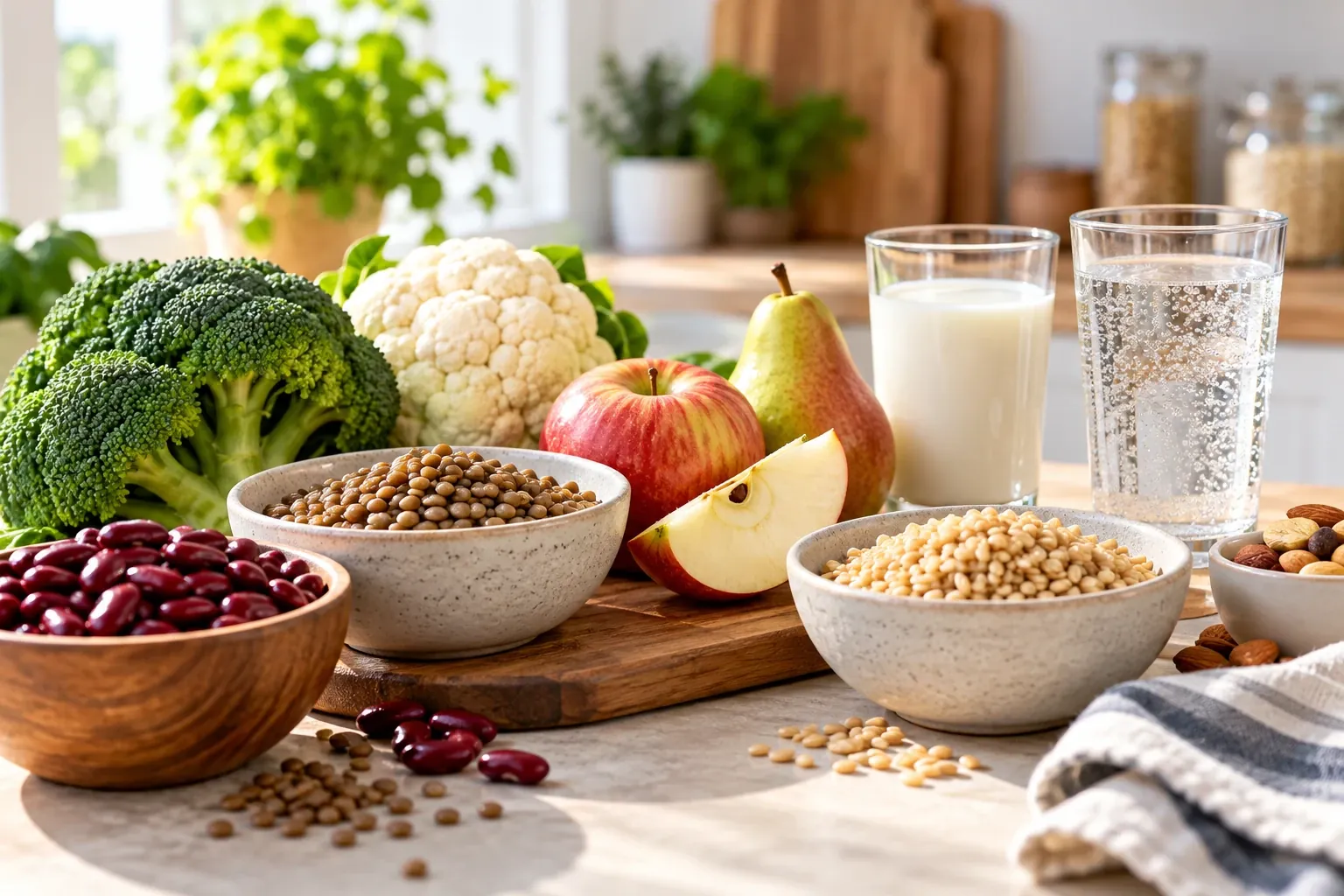
Table of contents
Many everyday foods and drinks can lead to gas or bloating in some people, from beans and broccoli to apples, dairy and sugar-free gum. But there's no list of foods that cause bloating for everyone. The same meal can leave one person comfortable and another feeling full and gassy. This guide explains which foods are commonly linked to gas and bloating, why they can have that effect, and how to work out which ones, if any, affect you.
The Short Answer
- Certain carbohydrates are the main dietary link. According to the National Institute of Diabetes and Digestive and Kidney Diseases (opens in a new tab) (NIDDK), some people have more gas symptoms when they consume carbohydrates that the stomach and small intestine don't fully digest. Bacteria in the large intestine break them down and create gas.
- Common examples include certain fruits and fruit juices, cruciferous vegetables, beans, peas and lentils, dairy products, whole grains, drinks with high-fructose corn syrup and products with sweeteners ending in "-ol."
- Other possible contributors include too much fiber, high-fat foods and fizzy drinks.
- Tolerance varies. These foods affect people differently, and many of them are nutritious. The goal is to learn your own patterns, not to cut out whole food groups.
This guide is educational and can't tell you what's causing your symptoms.
Why Can Certain Foods Cause Gas or Bloating?
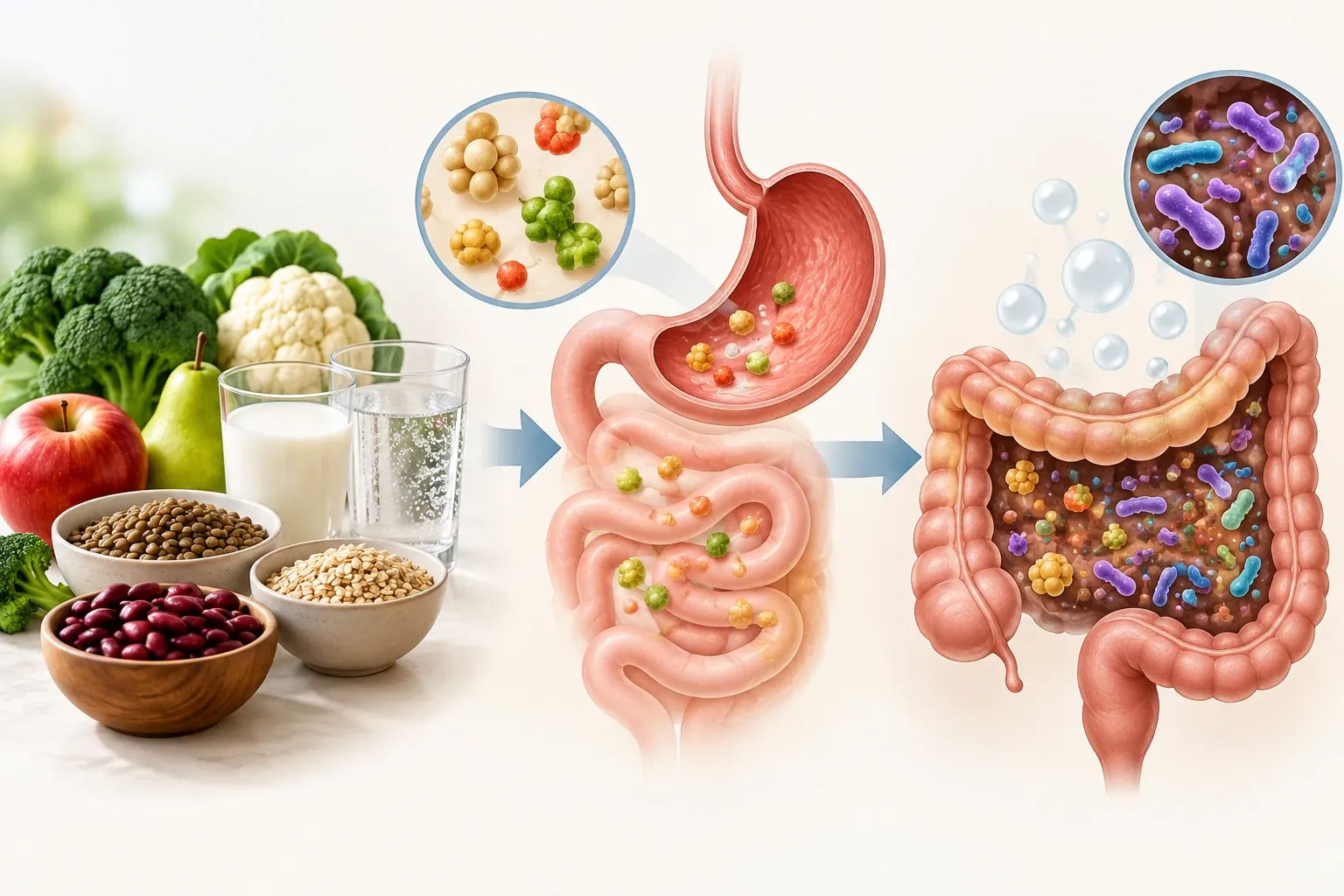
According to NIDDK (opens in a new tab), gas normally enters the digestive tract in two ways: when you swallow air, and when bacteria in your large intestine break down carbohydrates that weren't digested earlier.
Certain foods and drinks contain types of carbohydrates (sugars, starches and fiber) that the stomach and small intestine don't fully digest. When these reach the large intestine, bacteria break them down and create gas in the process. This is a normal part of digestion, and having some gas is normal, especially during or after meals. It becomes a concern when symptoms happen often, bother you or affect your daily activities.
NIDDK describes bloating as "a feeling of fullness or swelling in your abdomen, or belly." It's one of the common symptoms of gas, along with belching and passing gas.
Foods That May Contribute to Bloating or Gas
The foods below come from NIDDK's guidance on diet and gas (opens in a new tab) and treating gas (opens in a new tab). They may contribute to gas or bloating in some people. They don't cause symptoms in everyone, and none of them is unhealthy just because it's on this list.
Certain Fruits and Fruit Juices
NIDDK lists certain fruits, including apples, peaches and pears, and fruit juices among foods and drinks with carbohydrates that may lead to excess gas. It also lists drinks that contain high-fructose corn syrup, such as fruit juices, soft drinks, sports drinks and energy drinks. Some people have more gas symptoms after foods or drinks that contain a lot of fructose.
Cruciferous Vegetables
Cruciferous vegetables are a group that includes broccoli, cauliflower, collard greens and kale. NIDDK notes that some people have more gas symptoms after eating them.
Beans, Peas and Lentils
Legumes are a group that includes beans, peas and lentils. NIDDK lists them alongside cruciferous vegetables as foods that increase gas symptoms in some people. They're also nutritious foods, so it may be worth noticing how much you eat rather than leaving them out entirely.
Dairy and Lactose
Dairy products such as milk, ice cream and yogurt appear on NIDDK's list, but dairy doesn't cause bloating in everyone. The link is lactose, the natural sugar in milk.
According to NIDDK's page on lactose intolerance (opens in a new tab), people with lactose malabsorption make low levels of lactase, the enzyme that breaks down lactose. Undigested lactose passes into the colon, where bacteria break it down and create fluid and gas. In some people, this extra fluid and gas causes symptoms such as bloating, gas, diarrhea and abdominal pain, which may start within a few hours of having lactose.
Even for people with lactose intolerance, NIDDK notes that you may not need to avoid lactose completely. Most people with lactose intolerance can have some lactose (opens in a new tab) without getting symptoms, and avoiding all milk products may mean getting less calcium and vitamin D than you need. Only a healthcare professional can tell you whether lactose intolerance is behind your symptoms.
Whole Grains and Fiber
NIDDK lists whole grains, such as whole wheat, among foods that may lead to excess gas. It also notes that some people have more gas symptoms when they consume too much fiber.
That doesn't make fiber something to avoid. The amount and the pace of change matter. Our guide to fiber and bloating explains when fiber may help, when it may contribute to bloating and how to increase it gradually.
Sugar Alcohols ("-ol" Sweeteners)
Many sugar-free candies, gums and other products are sweetened with ingredients whose names end in "-ol," such as sorbitol, mannitol, xylitol, erythritol and maltitol. NIDDK notes that some people have more gas symptoms after consuming them. Checking ingredient labels can help you spot them.
Carbonated Drinks
Fizzy drinks are linked to gas in a different way. According to NIDDK, you swallow more air when you drink carbonated drinks, and swallowed air is one of the two main sources of gas in the digestive tract. Among ways to swallow less air, NIDDK suggests avoiding fizzy drinks and drinking with a straw.
Chewing gum and sucking on hard candy also increase swallowed air. Sugar-free gum can therefore add both swallowed air and "-ol" sweeteners.
High-Fat Foods
NIDDK notes that some people may have more gas symptoms when they eat high-fat foods, "which can increase bloating." As with the other foods on this list, the effect varies from person to person.
What About Gluten?
Gluten deserves a careful answer. Bloating and gas are among the possible digestive symptoms of celiac disease (opens in a new tab), a condition in which eating gluten triggers an abnormal immune system response. That doesn't mean gluten causes bloating in everyone.
A gluten-free diet is used to treat diagnosed celiac disease. It isn't a general recommendation for bloating. If you suspect gluten is a problem for you, talk with a healthcare professional before changing your diet. According to NIDDK, doctors don't recommend starting a gluten-free diet before diagnostic testing (opens in a new tab) because it can affect test results.
Why Does the Same Food Affect People Differently?
NIDDK notes that gas symptoms vary from person to person. A few reasons the same food can affect people differently:
- Digestion of specific carbohydrates differs. For example, people with lactose malabsorption make less of the enzyme needed to digest lactose.
- Amount matters. NIDDK notes that lactose intolerance symptoms may be mild or severe depending on how much lactose you have. Similarly, some people have more symptoms with too much fiber.
- Health conditions can play a role. NIDDK lists conditions that can cause problems with gas symptoms, including irritable bowel syndrome (IBS), lactose intolerance, dietary fructose intolerance, small intestinal bacterial overgrowth and celiac disease.
These are possibilities a healthcare professional may consider. Feeling bloated after certain foods doesn't mean you have any of these conditions.
Should You Avoid All Foods That Cause Gas?
Generally, no. Many foods linked to gas, such as fruits, vegetables, legumes, whole grains and dairy, are also important sources of nutrients. Cutting out all of them could make it harder to eat a balanced diet.
NIDDK's guidance focuses on consuming less of the foods and drinks that increase your gas symptoms, not on avoiding every food that might cause gas. NIDDK also suggests talking with your doctor about your diet. A doctor may refer you to a registered dietitian to help create a healthy eating plan. If you're considering eliminating a food group, discuss it with a professional first.
Are There Foods That Help With Bloating?
People often search for foods that reduce bloating, but the NIDDK sources we reviewed don't name specific foods that do. What they describe is adjusting what and how you eat:
- Eating habits: eating slowly, sitting down to eat when you can, avoiding talking while eating, and eating smaller, more frequent meals instead of larger ones.
- Less of your personal triggers: consuming less of the specific foods and drinks that increase your gas symptoms.
- For diagnosed lactose intolerance: NIDDK notes that lactose-free and lactose-reduced milk products may help lower the amount of lactose in your diet.
These steps may help some people, but results vary. For a closer look at food choices some people find easier to tolerate, see our guide to foods that help with bloating. For more everyday habits, see our guide to practical ways to support digestion and manage occasional bloating.
How to Identify Your Personal Food Triggers
Because tolerance varies, a general list can only be a starting point. A few practical ideas:
- Change one thing at a time. If you adjust several foods at once, it's hard to tell which change made a difference.
- Notice amounts, not just foods. A small serving may feel different from a large one.
- Look at how you eat, too. Eating quickly, fizzy drinks and gum can add swallowed air. If bloating tends to follow meals, our guide to bloating after eating covers other common contributors.
- Read ingredient labels. Look for "-ol" sweeteners, and for terms such as milk, lactose and whey, which NIDDK notes mean a product contains lactose.
Keeping a Food and Symptom Diary
According to NIDDK, your doctor may ask you to keep a diary of what you eat and drink and your gas symptoms. The diary can help your doctor or dietitian figure out whether certain foods and drinks could be causing your symptoms.
When to Talk to a Healthcare Professional
NIDDK advises talking with your doctor if:
- gas symptoms bother you
- your symptoms change suddenly
- you have other symptoms, such as abdominal pain, constipation, diarrhea or weight loss, along with gas symptoms
It's also a good idea to talk with a doctor or registered dietitian before making major changes to your diet, especially before removing entire food groups or starting a gluten-free diet. For safety reasons, NIDDK advises talking with your doctor before using supplements or probiotics.
The Bottom Line
Foods that cause bloating in some people may do so because they contain carbohydrates that bacteria in the large intestine break down into gas, or because of how they're eaten or drunk. Common examples include certain fruits and juices, cruciferous vegetables, beans, peas and lentils, dairy, whole grains, high-fructose corn syrup and "-ol" sweeteners. Too much fiber, high-fat foods and fizzy drinks may also contribute.
None of these foods causes bloating in everyone, and many are part of a healthy diet. Rather than avoiding them all, it may help to notice which foods and amounts affect you, keep a food diary, and talk with a healthcare professional if symptoms are frequent, bothersome or come with other symptoms.
Frequently Asked Questions
What foods cause bloating?
No food causes bloating in everyone. NIDDK lists foods and drinks that may lead to excess gas in some people, including certain fruits such as apples, peaches and pears, fruit juices, cruciferous vegetables, beans, peas and lentils, dairy products, whole grains, drinks with high-fructose corn syrup and products with sweeteners ending in "-ol." Some people also have more gas symptoms with too much fiber or with high-fat foods.
Does dairy always cause bloating?
No. Dairy products appear on NIDDK's list of foods that may lead to excess gas, but many people digest them without problems. In people with lactose intolerance, lactose that isn't digested in the small intestine is broken down by bacteria in the colon, which creates fluid and gas and can cause symptoms such as bloating. Only a healthcare professional can tell you whether lactose intolerance is behind your symptoms.
Can sugar-free foods cause gas and bloating?
They can in some people. NIDDK notes that some people have more gas symptoms after consuming sugar-free candies, gums or other products that contain sweeteners with names ending in "-ol," such as sorbitol, mannitol, xylitol, erythritol and maltitol.
What foods help with bloating?
The NIDDK sources we reviewed don't name specific foods that reduce bloating. What they describe is adjusting how much you have of the foods and drinks that increase your gas symptoms, along with habits such as eating more slowly and eating smaller, more frequent meals. A doctor or registered dietitian can help you make changes while keeping your diet balanced.
Should I stop eating foods that cause gas?
Not necessarily. Many of the foods linked to gas are nutritious, and they don't affect everyone the same way. NIDDK describes consuming less of the specific foods and drinks that increase your symptoms, and suggests talking with your doctor about your diet. Avoid cutting out entire food groups without professional guidance.
Can gluten cause bloating?
Bloating and gas are among the possible digestive symptoms of celiac disease, a condition in which eating gluten triggers an abnormal immune response. That doesn't mean gluten causes bloating in everyone. A gluten-free diet is used to treat diagnosed celiac disease, and NIDDK notes that doctors don't recommend starting one before diagnostic testing because it can affect test results.
Sources & References
- Government health agencyEating, Diet, & Nutrition for Gas in the Digestive Tract (opens in a new tab). National Institute of Diabetes and Digestive and Kidney Diseases (NIDDK). Accessed October 7, 2026
- Government health agencySymptoms & Causes of Gas in the Digestive Tract (opens in a new tab). National Institute of Diabetes and Digestive and Kidney Diseases (NIDDK). Accessed October 7, 2026
- Government health agencyTreatment for Gas in the Digestive Tract (opens in a new tab). National Institute of Diabetes and Digestive and Kidney Diseases (NIDDK). Accessed October 7, 2026
- Government health agencySymptoms & Causes of Lactose Intolerance (opens in a new tab). National Institute of Diabetes and Digestive and Kidney Diseases (NIDDK). Accessed October 7, 2026
- Government health agencyEating, Diet, & Nutrition for Lactose Intolerance (opens in a new tab). National Institute of Diabetes and Digestive and Kidney Diseases (NIDDK). Accessed October 7, 2026
- Government health agencySymptoms & Causes of Celiac Disease (opens in a new tab). National Institute of Diabetes and Digestive and Kidney Diseases (NIDDK). Accessed October 7, 2026
- Government health agencyDiagnosis of Celiac Disease (opens in a new tab). National Institute of Diabetes and Digestive and Kidney Diseases (NIDDK). Accessed October 7, 2026
Written by
Wellness Buyer Guide Editorial Team
Editorial team
The Wellness Buyer Guide editorial team researches and writes the articles published on this site.
View profile and articlesRelated Articles
Related Comparisons
- Digestive Enzymes vs. Probiotics for Bloating: What’s the Difference?
Digestive enzymes and probiotics aren't the same. Learn how they differ, what evidence says about each for bloating, and what to check before buying either.
Related Wellness Guides
- Bloating After Eating: Why It Happens and What May Help
Why do you feel bloated after eating? Learn common causes, from swallowed air to certain carbs and high-fat foods, what may help, and when to see a doctor.
- Fiber and Bloating: Can Fiber Help or Make Bloating Worse?
Can fiber help with bloating or make it worse? Learn how fiber type, amount and pace affect gas and bloating, plus what to know about fiber supplements.
- What Helps With Bloating and Slow Digestion? 7 Practical Ways to Support Better Digestion
Feeling bloated or dealing with slow digestion? Learn practical ways to support digestive health, including fiber, hydration, eating habits, activity, and what to consider before choosing a digestive supplement.
- Foods That Help With Bloating: What to Eat and What to Know
Looking for foods that help with bloating? Learn which foods may be easier to tolerate, how fiber, dairy and drinks play a role, and when to see a doctor.
- Constipation and Bloating: Why They Often Happen Together and What May Help
Can constipation cause bloating? Learn why these symptoms may happen together, what may help, and when it’s important to talk with a doctor.